Sunday, February 5, 2012

27 Vegetables

I recently read an article online about vegetable variety in French and German babies' diets during their first month of feeding. Researchers* compared the diets of French and German infants over the course of 28 days, and found that French babies were exposed to as many as 27 different vegetable varieties during that time period. None of the German babies were given more than 6 vegetables, while 40% of French babies ate between 7-12 different types of vegetables. 


The part I found most interesting was this: The mothers (who were the focus of the study, rather than the fathers) were asked why they chose their particular feeding strategies. The German mothers said they were concerned about food allergies (and exposed their children to just 3 different vegetables on average), where the French mothers mentioned "taste development" and exposed their children to an average of 6 vegetables, on average. 


(asparagus)


Taste development. I can get behind that. I was a pretty picky eater as a child (sorry mom) and didn't discover the joys of things like brussels sprouts, sushi, caramelized onions and kale until my late teens and early 20's. I'd hate for Luke to miss out. 



(thinking about asparagus)

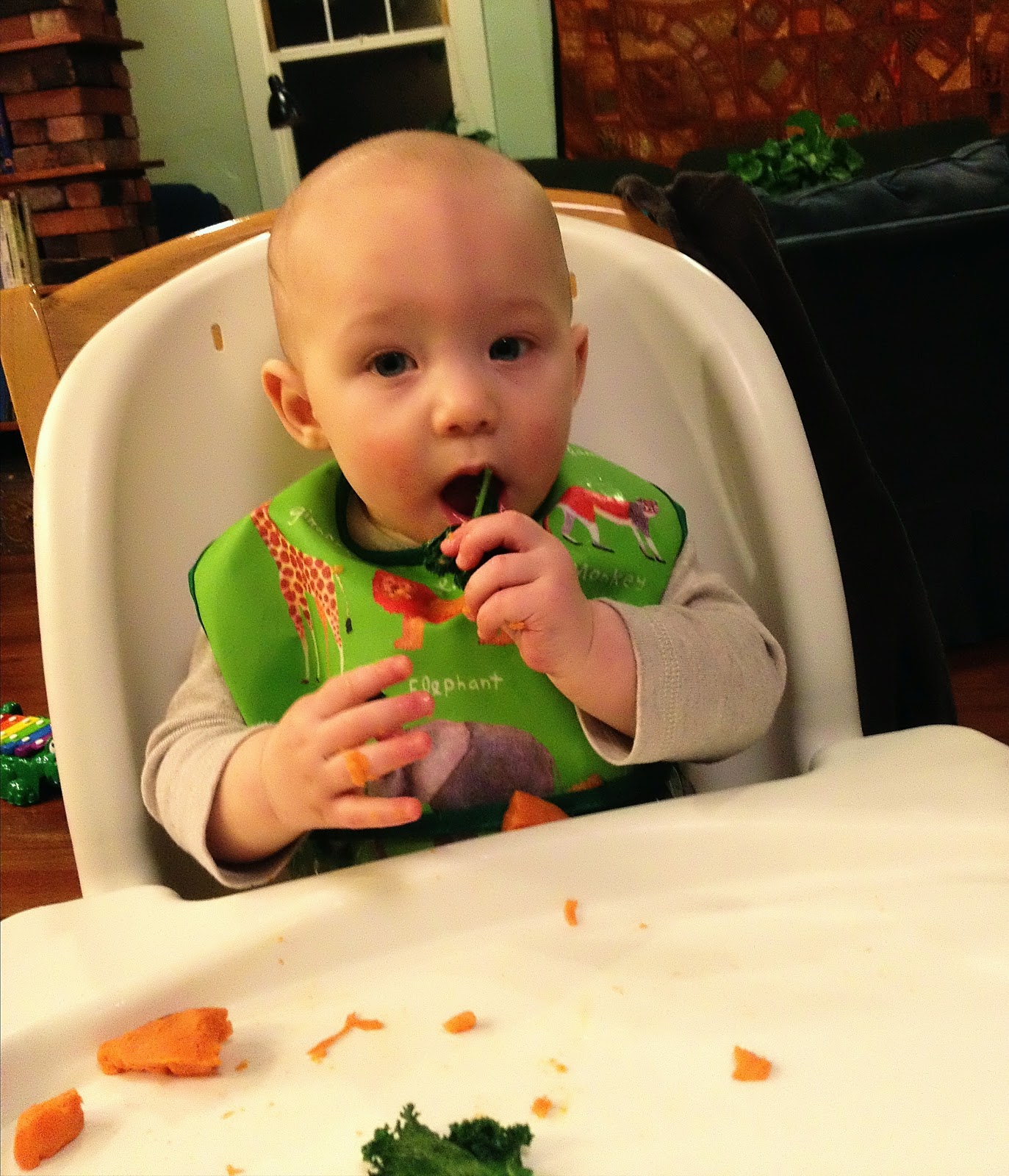
Luke has just started "eating". He doesn't really understand the concept of swallowing and mostly gnaws on chunks of food and smears it on his tray and head. But I believe that tasting, smelling, and squishing foods are important parts of the learning process and exposure to a lot of vegetables, fruits, grains and legumes are crucial to developing an adventurous eater. 


(red bell pepper)


Over the next month, I'm going to try to expose him to as many fruits and vegetables as possible- just to taste and squish- or even swallow if he can figure that out. 


27 vegetables. I think we can do that. 


The list so far:
1. carrot
2. sweet potato
3. avocado (not technically a vegetable, but whatever!)
4. kale
5. peas
6. acorn squash
7. celery
8. bell pepper
9. asparagus


 (18 to go!)


*Source: Maier, A. et al. 2007. “Food-Related Sensory Experience From Birth Through Weaning: Contrasted Patterns in Two Nearby European Regions.” Appetite 49: 429-40.

Thursday, February 2, 2012

Okonomiyaki

Yeah, I had no idea what that was, either. Okonomiyaki is a Japanese "pizza" that is a popular street food in Kyoto.

Luke was nursing while I was reading through food blogs (again) and I encountered this post on one of my favorite food blogs, Daily Nibbles. At first glance, a "pizza" made of cabbage and leeks sounded unpleasant at best, but after reading it through a second time it sounded intriguing. Sarah at Daily Nibbles got her recipe from 101 Cookbooks.


It didn't hurt that I'd picked up a "Good Food Box" from Seattle Tilth (more on that particular adventure later!) and it was full of cabbages, leeks, herbs, and potatoes. Perfect! So, okonomiyaki it is!

In what was probably the fastest "read-it-on-a-blog-and-prepare-it-for-dinner" turn-around time, dinner was ready.

It was really easy to make: I shredded about 4 cups of savoy cabbage (local and organic!) and tossed it with about a half cup of finely shredded leek. Then, I added about a cup of whole wheat pastry flour and a dash of salt and tossed everything together. Finally, I added 4 beaten eggs and mixed everything together with tongs.


Pour around a tablespoon of olive oil into a frying pan (I also added a kersplash of toasted sesame oil) and then place around a cup and a half of the mixture in the pan and gently flatten it like a pancake. I cooked each side over medium-low heat for about 4 minutes per side, flipping when the egg mixture set (it seemed like it would be a delicate process but the whole thing flipped quite easily).


We topped it with a dash of cayenne and some chives, and dipped it in soy sauce.


(That's Nathan's homebrewed IPA beer in the background!)

It was weirdly delicious. I'm going through a roasted brussels sprouts phase, and also hugely enjoy oven-roasted broccoli and kale, and this reminded me a lot of it. What is it with browned cruciferous vegetables that make them so darn tasty?


Wednesday, February 1, 2012

Oh, Farro

Have you tried farro yet?

Oh, gosh. It's SO good.

Farro is an ancient wheat grain that is quite robust and hearty, but really easy to make (simmer it for about 25 minutes.) It's chewy and nutty and holds its own in a dish. We buy ours from PCC, and it comes from Bluebird Grain Farms in Winthrop, WA (yay for local food!).

If you haven't yet cooked with farro, I highly recommend it. I've cooked it several different ways, and tonight's dinner was one of my favorites.


While the farro was simmering, I sauteed kale in butter with a dash of lemon juice and salt and pepper. I added garlic, olive oil, lemon juice, paprika and red chili pepper to white beans, and then cooked two turkey sausages. I also heated pureed spaghetti sauce with a touch of butter, red wine vinegar and cayenne pepper. I tossed the cooked farro with chunks of sausage. To serve it, I piled the farro and sausage on top of the sauteed kale, then added a heap of the beans, and an over-easy egg. I artfully (?) drizzled the tomato sauce over the top.

Nathan loved it. I loved it. Luke tasted his first piece of kale and didn't seem repulsed (but preferred applesauce).


I've cooked farro with diced bacon and it's also amazing.

Have you tried farro? How did you cook it?