Monday, February 20, 2012

Amazing Artichoke Tart and Veggie Update


I'm not a huge fan of polenta. I eat it, but I don't love it. I want to like it- I tend to like warm, starchy, comforting things like pasta and toast and risotto and hot cereal. For some reason, polenta (so far) hasn't really become my thing. But...!


I gave polenta another try this week and discovered a HIT!  I found this recipe on The Wednesday Chef's blog: Artichoke Tart with Polenta Crust. You make a thick polenta, then form it into a crust shape in a tart dish (I used a springform pan), then layer artichoke hearts and goat cheese on the crust, and pour a tangy, herby yogurt mixture over the top, sprinkle with parmesan cheese, and bake. I made a few changes- I didn't use scallions, added about a cup of shredded zucchini to up the vegetable quotient, and used about 1/3 cup sour cream in place of some of the yogurt. 


I highly recommend it! It's a really flexible, healthy, and seemingly fool-proof recipe that looks and tastes fancy! Fresh herbs are key- I used about a tablespoon of fresh rosemary and a large handful of fresh parsley. The polenta is flavorful thanks to the vegetable stock it's cooked in and a generous handful of parmesan cheese in the mixture. The texture is firm and anything but gloopy. The  left-overs were also great for breakfast!


I've been offering Luke his choice of fresh (and cooked) veggies. He's excited about tasting them, but really doesn't consume much. He seems to really like gnawing on fresh cucumber. I'm about halfway through my goal of introducing 27 vegetables in his first month of eating!


The updated list:
1. carrot
2. sweet potato
3. avocado
4. kale
5. peas
6. acorn squash
7. celery
8. bell pepper
9. asparagus

10. cucumber
11. brussels sprout 
12. arugula
13. zucchini


(14 to go!)

Friday, February 10, 2012

Vanilla Extract

When I was in fifth grade, I had a hamster named Vanilla Extract. I named him or her this because I acquired him/her shortly after another hamster (Goldilocks The Second- I went through a lot of hamsters in elementary school) and in order to introduce a second hamster to the first, the pet store advised us to dab vanilla extract on the two animals noses and hindquarters so that they'd smell similarly and not beat each other up. It worked, and the name stuck. 


Vanilla extract has thus been an important part of my life for many years now. I no longer have pet hamsters so the flavoring is solely used as an ingredient in baking in our household--but aren't you glad to know how to keep hamsters from fighting? Useful information.


Vanilla extract! It's expensive stuff! And, unless you buy the fancy, pure, organic stuff, it's also often loaded with strange chemicals like propylene glycol. Why consume a substance that's also used as a de-icer? Vanilla extract from Mexico is also shady- the FDA strongly recommends against consuming most Mexican vanilla extract. 


"Ugh," you say. Hamsters? De-icer? FDA warning?! What are we doing here?


Exactly! Let's make our own vanilla extract! It's much better to know exactly what we're putting in our bodies. And vanilla extract? So easy!


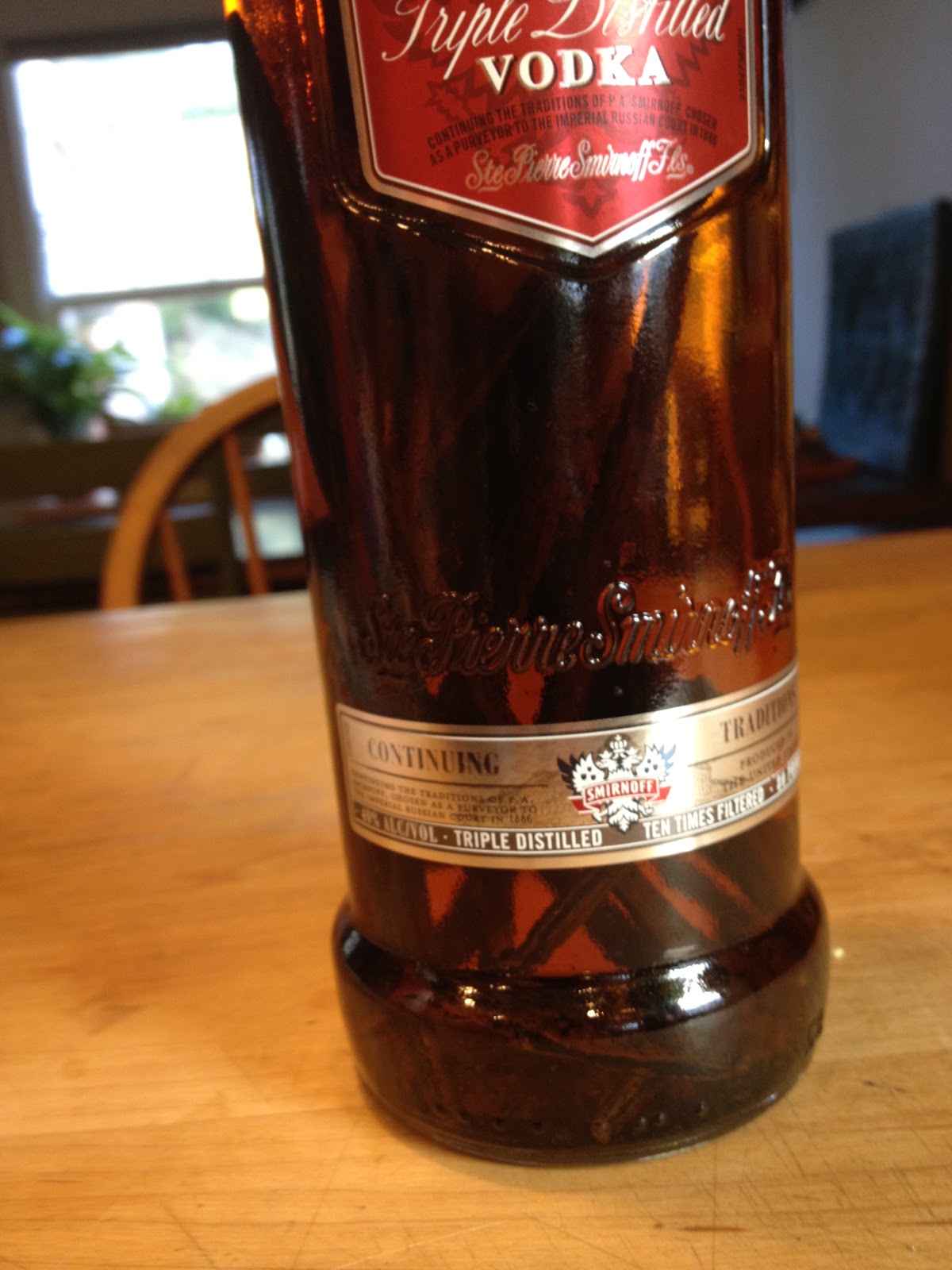
Step 1. Acquire 8-10 fair trade vanilla beans. PCC (in the Seattle Area) or Whole Foods are good sources, but you can also buy them online.


Step 2. Get a bottle of vodka. 


(Enjoy the scent of vanilla bean caviar on your fingers!)


(After 24 hours)


Step 3. Slice the vanilla beans lengthwise and insert into vodka bottle. Shake. Let sit, shaking occasionally, for around a month. Enjoy! 


(After 3 weeks)


I've been using it in place of store-bought vanilla extract and it is great. Every time I use it, though, I find myself pondering what sort of cocktail could be made with it...


Wednesday, February 8, 2012

"The Sharper Your Knife, The Less You Cry" book review


Kathleen Flinn
2007


I enjoyed this memoir written by journalist Kathleen Flinn. After years working in corporate middle management, she finally gets up the nerve to quit her job, move to Paris, and attend Le Cordon Bleu. The book details the year or so that she spent studying French cuisine- through the Basic classes all the way through the super-competitive Superior course. 

There is a whole genre now of "What I Did in One Year" books out there (followed all the rules in the Old Testament, learned to become happy) and I tend to really enjoy these books. I expected this book to be similar to the wildly popular "Eat, Pray, Love" by Elizabeth Gilbert. I was pleasantly surprised to find "The Sharper Your Knife, The Less You Cry" to be mostly free of emotional angst. 

The author moves to Paris to follow her dream of learning how to become a chef--but she doesn't do so because of heartbreak or to get out of an unhappy relationship. She does it for herself and to be true to her passion for cooking. I really appreciated that facet of the book: her motivations were pretty clear and the reader didn't have to follow a roller coaster ride of emotions to get through the book. Kathleen starts her culinary journey at the beginning of a sweet and loving relationship, and ends her studies married to that same kind and supportive man. How refreshing is that? 

I felt like the lack of emotional drama allowed me to just enjoy the story- her experiences at the competitive Le Cordon Bleu cooking school, her foodie adventures in Paris, and cooking in tiny, romantic sounding, French apartments. At the end of the book, Flinn is proud of her culinary skills, madly in love, and pleased to have followed through with something she had been longing to do for years. 

Flinn's writing was not at all pretentious, in direct contrast to the utterly pretentious food that she cooks. Flinn approaches her education at Le Cordon Bleu with enthusiasm, but doesn't ever adopt the snobbishness that often imbues French cuisine.  I'm not at all compelled by French cooking- too stuffy, meat-heavy, and fatty, however, she makes French cuisine approachable and interesting. (Though you won't find me stuffing veal or cooking with foie gras anytime soon!)

I think this book would make a great light read for a foodie or food-loving francophile. It's full of mouth-watering food adventures and glimpses inside the fascinating world of Le Cordon Bleu. It isn't a life-changing book, but it is an enjoyable read and has some inspiring recipes. It was a great way to start off the literary part of my 2012 Food Challenge!

I'll be cooking something based on a recipe in "The Sharper Your Knife, The Less You Cry" sometime in the next week!